
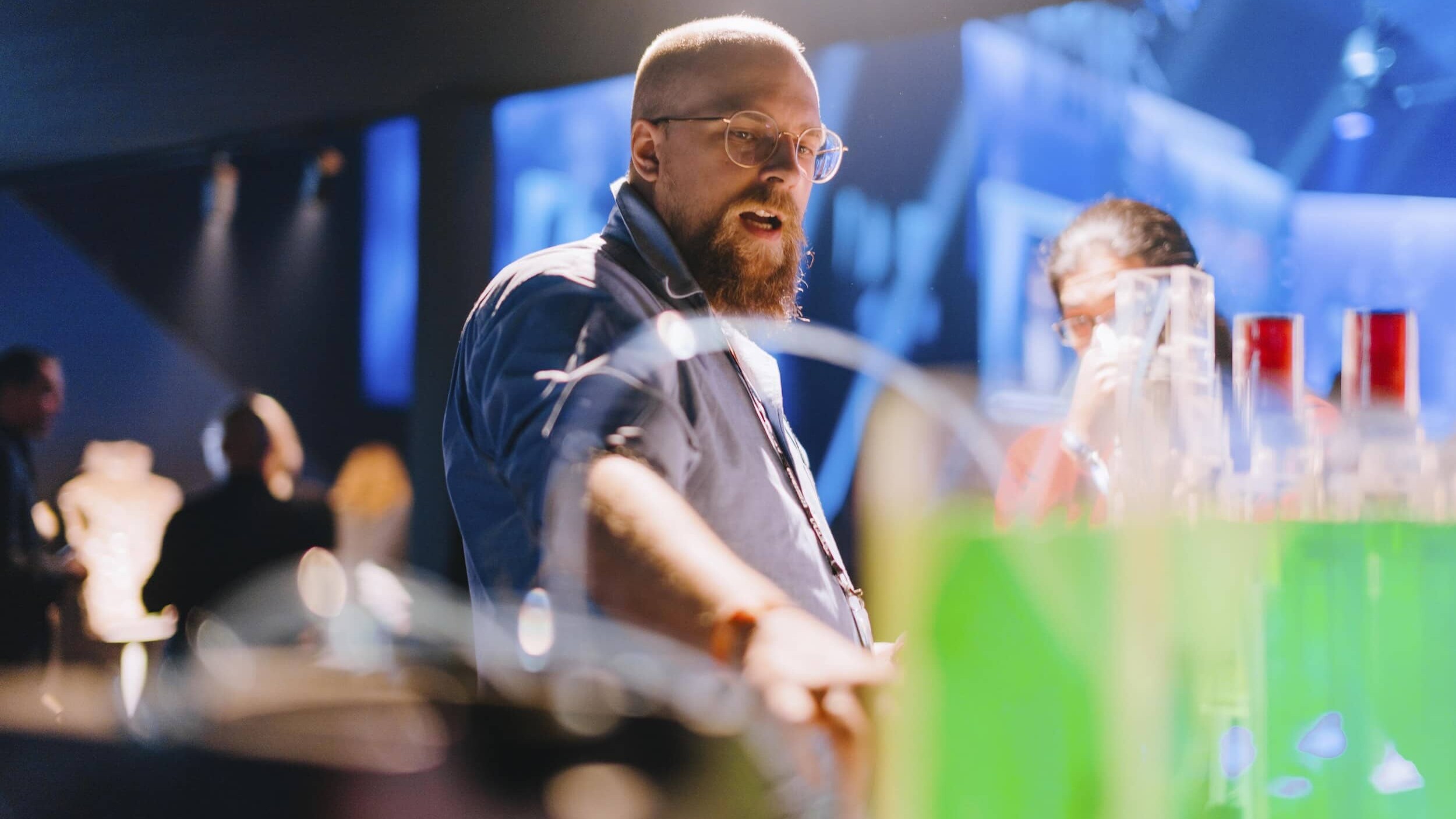
As Europe looks for domestic and circular fertiliser sources, Finnish deep tech company and EriCa Reactor participant NPHarvest is turning nutrient-rich liquid waste streams from sources such as biogas plants into valuable fertiliser inputs. The same process can reduce nutrient emissions, lower disposal costs, create new value streams for operators and help make Europe less dependent on imported fertilisers.
Fertiliser is no longer a boring input, it is Europe’s next strategic dependency
Europe learned the hard way that energy dependency is not just an economic issue. It is a political one. It shapes industrial policy, food prices, national security and the ability of countries to act independently.
Fertilisers are now moving into the same category.
Food does not grow without nitrogen and phosphorus. They are basic inputs for agriculture, but Europe remains dependent on imported fertilisers, fossil-based production and fragile global supply chains. Russia’s war in Ukraine made this dependency visible. Iran’s closure of the Strait of Hormuz in March 2026 added another layer of urgency: when global shipping routes can be disrupted overnight, the inputs behind European food production become harder, more expensive and politically riskier to secure.
That sounds obvious, almost too basic to say out loud. But it is exactly the kind of basic dependency Europe tends to ignore until it becomes a crisis.
NPHarvest co-founder Juho Uzkurt Kaljunen and recovery modules of the demo unit
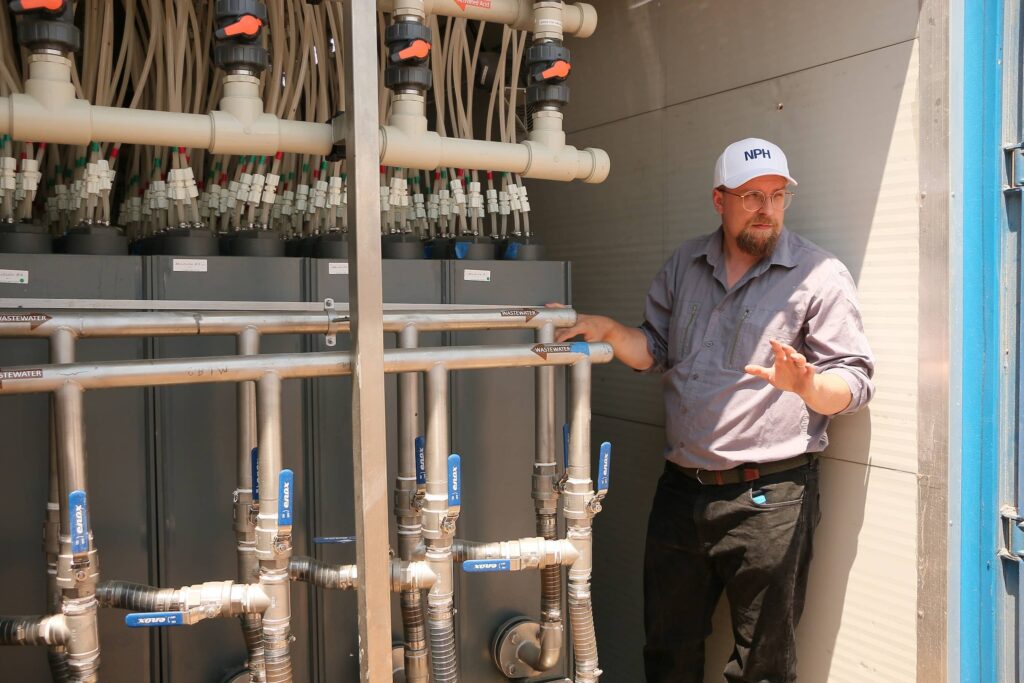
As NPHarvest co-founder Juho Uzkurt Kaljunen said in an article of Tekniikan Maailma: “Nitrogen and phosphorus are as essential as water itself.”
That sentence changes the frame. Fertiliser is not a technical side issue for farmers. It is part of the machinery that keeps modern food production alive.
Without fertilisers, the world could feed only a fraction of its current population. Yet the current system still wastes what it needs most. Phosphorus is mined from the ground. Nitrogen is captured from the air through an energy-intensive industrial process. Nutrients flow through farms, cities and wastewater systems — and then society pays to remove them instead of recovering them.
Around 80 percent of countries are net importers of nutrients. Roughly 30 percent of nutrients end up in wastewater. At the same time, the ammonia value chain represents an estimated €150 billion in annual costs and around 1.5 percent of global greenhouse gas emissions.
In other words, Europe is importing nutrients, using fossil energy to produce them, losing a large share of them into waste streams, and then spending more money to remove those same nutrients from water. That is not a circular economy problem. It is an industrial design failure.
At the same time, the European Commission’s Fertiliser Action Plan highlights domestic and circular fertiliser sources, including nutrient recovery from wastewater, sludge and side streams.
That shift matters. Wastewater is no longer just a treatment problem. It is becoming a resource question. This is where NPHarvest enters the picture.
Turning waste into high-value fertiliser inputs
NPHarvest is not trying to make fertilisers sound greener. It is trying to change where fertiliser raw materials come from.
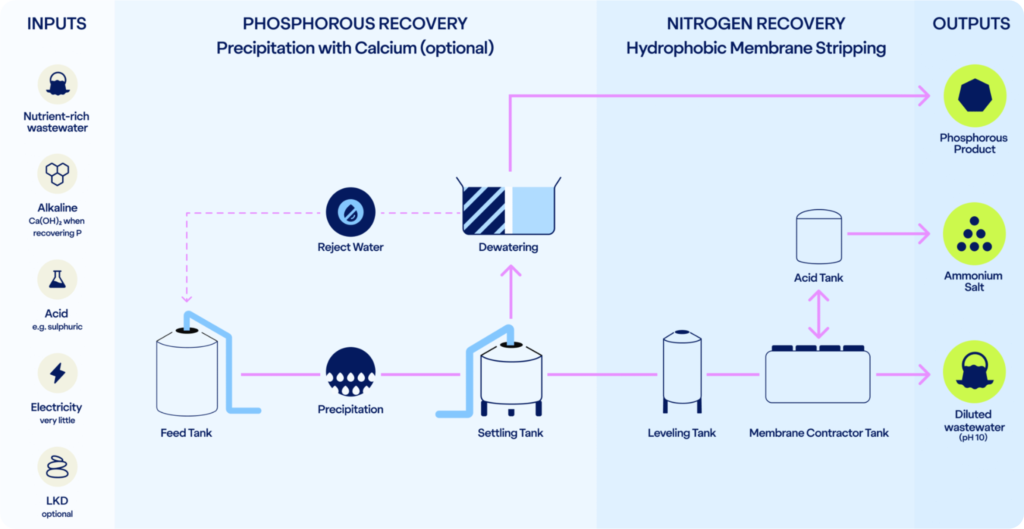
The company recovers nitrogen and phosphorus from concentrated wastewater streams, such as liquid digestate from biogas plants, reject water from wastewater treatment plants and liquid side streams from farms. The output is not vague “circular value”, but concrete fertiliser-grade inputs such as ammonium salts and calcium phosphate.
The idea is simple: where operators currently pay to treat, transport or dispose of nutrient-rich liquids, they could instead recover local fertiliser raw materials.
Europe is now flushing away something it then has to import, manufacture with fossil energy, or mine from the ground. This is the absurdity NPHarvest is trying to fix.
From Aalto University research to industrial technology
NPHarvest is a spinoff from Aalto University. The company was founded in 2023 after years of academic research, and is now commercialising the technology.
The system combines phosphorus recovery with membrane-based nitrogen recovery. Using its Nutrient Catcher technology, NPHarvest can recover up to 90% of both nitrogen and phosphorus from concentrated nutrient-rich liquid waste streams.
That combination is important.
Many existing solutions either remove nitrogen without creating a valuable product, recover only part of the nutrient stream, produce a mixed low-value output, or require high energy use and complex operation. NPHarvest’s claim is different: low operational cost, a cleaner end-product and modular integration into existing industrial infrastructure.
At full scale, biogas plants, wastewater treatment facilities and farms could become a permanent part of Europe’s fertiliser value chain.
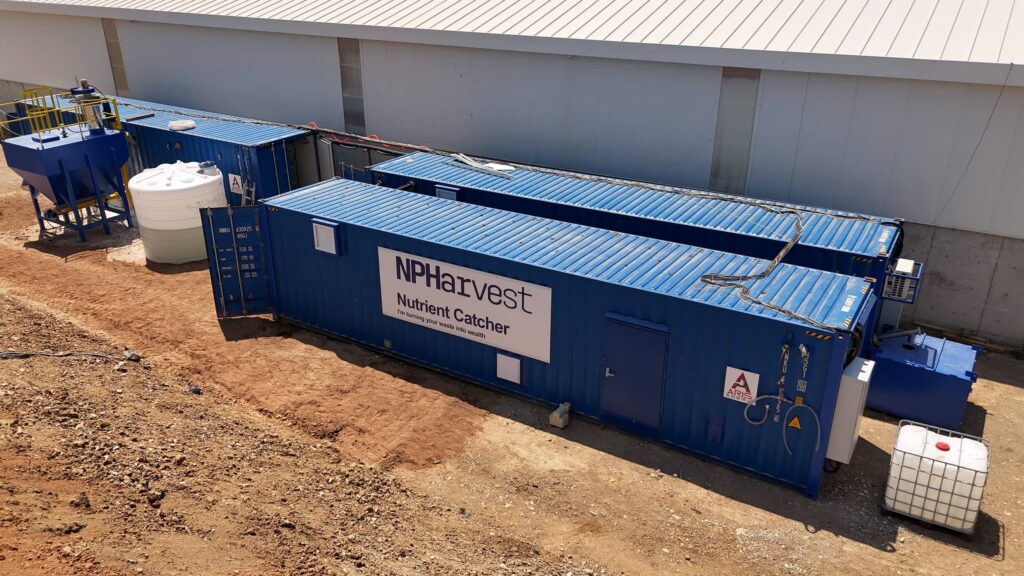
NPHarvest demo unit
The biogas sector has a nutrient problem
Biogas is growing in Europe, but the sector carries a less visible operational headache: digestate.
When organic material is converted into biogas, a nutrient-rich residue remains. That digestate can be useful, but it can also be expensive to manage. Nutrient application limits, local regulation, transport distances and tightening environmental rules all affect the economics.
In target regions, operators pay around €10–15 per cubic metre to dispose of these liquids. In some areas, the cost can be even higher. For a large plant, that adds up to a significant operating expense.
This is why NPHarvest’s commercial argument is stronger than a typical circular economy pitch. The company is not only selling environmental benefit. It is selling cost reduction.
If nutrients can be recovered on site, a biogas plant can reduce transport, lower its nutrient burden, improve compliance and create a usable fertiliser input from a stream that would otherwise cost money to manage.
The potential customer base is not small. NPHarvest identifies around 20,000 wastewater treatment plants and 20,000 biogas plants in Europe, alongside millions of farms that generate nutrient-rich liquid side streams. Across wastewater treatment, biogas and animal farms, the company estimates its European serviceable market at more than €30 billion by 2030.
One demo, and the market came to look
NPHarvest’s next important proof point is in Germany.
In spring 2026, the company deployed a 20 cubic metre per day demonstration unit at a biogas plant in Lower Saxony. The location matters. Germany is Europe’s largest biogas market, with thousands of plants facing rising pressure to manage digestate more efficiently.
The unit processes liquid digestate in a real operating environment. According to NPHarvest, the early results have been strong, and external laboratory checks have supported the company’s internal analysis.
After deploying the German demo, more than 20 potential customers lined up to visit the site. For a technology still at the beginning of commercial scale-up, that is a strong market signal.
In deep tech, real traction rarely looks like noise. It looks like customers showing up at an industrial site to see whether the system can solve their problem. That is now happening with NPHarvest.
Biogas operators do not need another abstract sustainability concept. They need a practical answer to rising digestate management costs, tightening nutrient regulation and the pressure to turn waste streams into something useful.
NPHarvest ran a real-world demo, and the sector noticed.
Europe is now looking for exactly this kind of solution
NPHarvest’s timing is unusually good. EU fertiliser policy is being pushed by several forces at once. Europe wants to reduce dependency on fertilisers from politically risky sources. Fertiliser trade is exposed to geopolitical shocks and shipping disruptions. At the same time, nutrient regulation is pushing wastewater and biogas operators away from simple disposal and towards recovery, reuse and circular nutrient management.
For NPHarvest, this means the market is not driven only by voluntary sustainability commitments. It is driven by cost, regulation, food security and geopolitics.
A good deep tech company usually needs three things: a large problem, a technical edge and a market that is ready to change. NPHarvest appears to be reaching the point where those three are beginning to align.
NPHarvest end products (photo Jari Härkönen)

Scaling from pilot to market with EriCa Reactor
NPHarvest is also part of the first EriCa Reactor cohort. The programme is organized by Crazy Town at EriCa Green Chemistry Park, with industrial partner Kemira supporting startups and research-based teams working on clean water, green chemistry and industrial sustainability.
The fit is clear. Nutrient recovery sits at the intersection of water, chemistry, industrial side streams and scalable infrastructure. For NPHarvest, the value of a programme like EriCa Reactor is not generic mentoring. It is access to conversations where the technology can be tested against industrial realities: process integration, chemical use, product quality, customer value, regulation and the wider value chain.
That matters because nutrient recovery is not just a machine sale. It touches operations, logistics, fertiliser markets, environmental compliance and industrial procurement.
Collaborating with dedicated hosts and coaches helps the team understand how the solution integrates into real-world industrial processes, and what is needed to move from pilot to market.
Those are the places where deep tech companies either scale or get stuck.
The next step: a €4 million seed round
NPHarvest is now targeting a €4 million seed round in 2026 to build its delivery organisation and commercial capability for the first full-scale installations.
The round is intended to help the company move from validated technology to repeatable deployment. That means delivering permanent units, improving unit economics, increasing the value of recovered nutrient products, growing the sales team and accelerating market entry through local expert partners.
For investors, the question is not whether nutrient recovery is becoming relevant. Regulation, fertiliser security and biogas economics are already pushing the market in that direction. The question is who can turn that pressure into working infrastructure.
That makes NPHarvest relevant to three audiences now.
- First, biogas plants, wastewater treatment facilities, farms and industrial operators with concentrated nutrient-rich side streams and rising disposal costs.
- Second, industrial partners who can support product quality, downstream processing, fertiliser market access, distribution or system deployment.
- Third, investors who understand deep tech and business field NPHarvest is operating in
Unlike many deep tech companies, NPHarvest is in a position to scale quickly thanks to strong market traction and an existing distributor network in its target markets. The company can build a defensible position as regulation, infrastructure and market timing increasingly move in the same direction.
NPHarvest is not solving a niche wastewater problem. It is making waste streams part of Europe’s fertiliser independence.
NPHarvest will be at the EriCa Reactor Demo Day on August 20, 2026 and team can be contacted at https://www.npharvest.fi/